Red Cherry Fruit Harvest Jumbo Paperclip Review
As an embroidery designer who has spent countless hours digitizing and testing files for real-world application, I have learned that the difference between a mediocre finished product and a bestseller often comes down to the initial design choice. Recently, I evaluated the Red Cherry Fruit Harvest Jumbo Paperclip, a digital asset categorized under Crafts and Graphics, to determine its viability for actual stitching projects. While the product description identifies it primarily as a sublimation design available for digital download, its visual structure offers intriguing possibilities for machine embroidery if approached with the right technical mindset.
First Impressions and Visual Personality
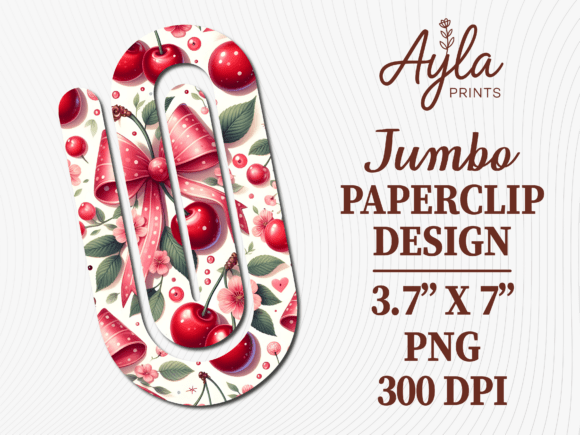
The first thing that strikes you about the Red Cherry Fruit Harvest Jumbo Paperclip is its playful yet functional aesthetic. The design merges the organic, vibrant appeal of harvested cherries with the rigid, familiar shape of a jumbo paperclip. This juxtaposition creates a mood that is both whimsical and organized, making it an excellent candidate for products that aim to blend creativity with utility. The layout is clean, with a clear focal point that draws the eye immediately to the fruit element.
From a designer’s perspective, the simplicity of the shape is a strength. Complex gradients and photorealistic details often fail in embroidery due to stitch limitations, but this design relies on bold shapes and strong color contrasts. The red of the cherries against the metallic implication of the paperclip suggests a high-contrast palette that translates well to thread. However, since the product includes three PNG files sized approximately 3.7 by 7 inches, it is crucial to understand that these are raster images, not vector-based embroidery files. This distinction defines how we must approach the project.
Real-World Application: The Custom Tote Bag Scenario
To test the practical value of this design, I imagined a specific client request: a set of custom tote bags for a local boutique stationery shop. The owner wanted merchandise that reflected their brand’s love for office supplies and natural elements. The Red Cherry Fruit Harvest Jumbo Paperclip fit this brief perfectly. The 3.7 by 7-inch dimensions are substantial enough to make a statement on a canvas tote without overwhelming the fabric.
In this scenario, the design would serve as the central graphic on a tote bag design. If I were converting this PNG into a machine embroidery design, I would focus on maintaining the integrity of the cherry shapes. The roundness of the fruit lends itself well to fill stitch techniques, which provide a smooth, solid coverage. The paperclip element, being thinner and more linear, would require careful handling. Using a satin stitch for the metal loop could add a nice textural contrast to the filled cherries, mimicking the sheen of metal through thread direction.
For a small shop product like this, the visual appeal directly impacts customer trust. A clean, well-executed embroidery job signals professionalism. If the design appears pixelated or the stitches are uneven, it detracts from the perceived value of the handmade product. Therefore, using the provided PNGs as a reference for manual digitization or as a print-and-stitch guide is essential. You cannot simply import a PNG into most embroidery machines and expect a perfect result; it serves as the visual blueprint for your embroidery project.
Navigating Technical Challenges and Fabric Choices
While the design is visually appealing, there are areas where caution is necessary. The 3.7 by 7-inch size is relatively large, which means stitch density becomes a critical factor. If you are digitizing this yourself or hiring a digitizer, you must ensure that the fill areas are not too dense, especially if you are working with lighter fabrics. High-density stitching on thin material can cause puckering, ruining the finished product.
I recommend testing the design on scrap fabric first. This is non-negotiable for any serious craft business. Check how the thread colors interact with your chosen fabric. The bright red of the cherries will pop beautifully on white, cream, or light gray cotton, but it may get lost on dark navy or black fabrics unless you use a high-contrast underlay or outline. For dark fabrics, consider adding a white running stitch border around the cherries to make them stand out.
Another consideration is the hoop size. A 3.7 by 7-inch design requires a hoop that can accommodate these dimensions comfortably. Standard 5x7 hoops might be too tight, leaving no room for proper stabilization. A 6x10 or larger hoop would be ideal. Always use the appropriate stabilizer; for tote bags and heavier cottons, a cut-away stabilizer provides the necessary support to prevent distortion after washing.
Versatility Across Product Lines
Beyond tote bags, the Red Cherry Fruit Harvest Jumbo Paperclip has potential in various other categories. For custom apparel, such as sweatshirts or t-shirts, the design could be placed on the chest or back. However, keep in mind that stretchy fabrics like jersey knit require extra care. The stability of the fabric affects how the stitches lay, so using a tear-away stabilizer for woven shirts and cut-away for knits is standard practice.
For baby embroidery items, such as bibs or onesies, the playful theme is appropriate, but the size might need to be scaled down. If you scale it down, ensure that the details do not become too small to stitch cleanly. Tiny details can turn into a mess of thread if the needle penetration is too close together. Similarly, for embroidered patch creation, this design would work well on twill fabric, providing a durable and attractive accessory for jackets or bags.
Etsy sellers and digital product creators can also leverage this asset. While it is sold as a sublimation design, it can be used to create printable mockup assets for listing previews. Showing how the design looks in an embroidered context can help buyers visualize the final product, even if they are purchasing the digital file for sublimation. This cross-category utility adds value to the design assets.
Practical Notes for Designers and Makers
Before committing to a full production run, here are my top recommendations for working with this design:
- Verify Licensing: Since this is a digital download, confirm whether the license allows for commercial use of finished physical items. Most craft graphics do, but always check the specific terms provided by the seller.
- Digitize with Care: If converting the PNG to an embroidery file, pay attention to the transitions between the cherry stems and the fruit. Use running stitch for fine lines and outlines to keep the design crisp.
- Test Color Contrast: Create black and white mockups to see if the design holds its shape without color. If it looks muddy in grayscale, it may lack definition in stitching.
- Consider the End Use: For items that will be washed frequently, such as kitchen towels or holiday embroidery gifts, ensure the thread quality is high and the stitches are secure to prevent unraveling.
In conclusion, the Red Cherry Fruit Harvest Jumbo Paperclip is a versatile graphic with strong potential for embroidery adaptation. Its clear shapes and thematic charm make it suitable for a wide range of personalized gift items and commercial embroidery projects. By respecting the technical limitations of the medium and preparing your materials correctly, you can transform this digital graphic into a tangible, high-quality product that resonates with customers. Whether you are an experienced Etsy seller or a hobbyist looking to expand your skills, this design offers a fun and rewarding challenge.