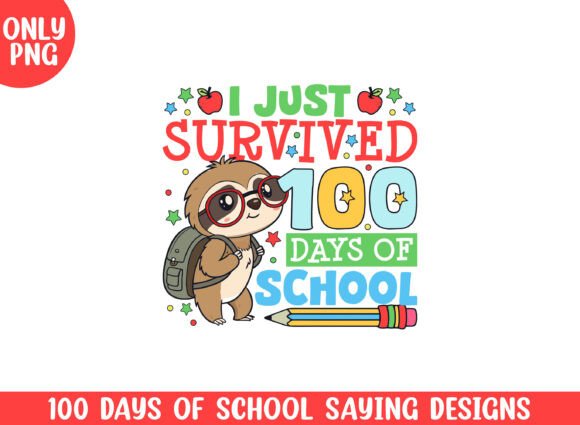
Review: Survived 100 Days of School Sloth Png for Embroidery
As a designer who spends more time staring at stitch simulations than actual sunlight, I have learned to be skeptical of digital assets labeled as "easy" or "versatile." The market is flooded with generic Graphics that look promising on a screen but turn into a tangled mess under the needle. However, when I recently pulled up the Survived 100 Days of School Sloth Png for a potential client project, my initial skepticism gave way to genuine interest. This isn’t just another clipart file; it is a strategic design asset for anyone in the Crafts industry looking to capitalize on the massive Q1 school milestone market.
First Impressions: Mood and Visual Personality
The first thing that strikes you about this design is its attitude. The "100 Days of School" theme is often cluttered with chaotic numbers and overly bright, primary colors. This sloth design, by contrast, offers a relaxed, humorous counterpoint. The mood is celebratory but chill, which resonates perfectly with both exhausted teachers and proud parents. Visually, the layout is balanced. The sloth character serves as a strong anchor, while the typography integrates smoothly without competing for attention.
From a technical standpoint, the fact that this asset is made with 100 vector shapes and is re-sizable is a significant advantage. For us embroidery designers, scalability is crucial. It means we can adapt the core artwork for different applications without losing crispness in the preview stages. Whether you are creating a large back-print for a teacher’s sweatshirt or a small chest logo for a student’s t-shirt, the underlying geometry holds up. This flexibility allows for a high level of customization, making it a valuable addition to your library of design assets.
Real-World Application: The Custom Sweatshirt Test
To truly evaluate a design, you have to imagine it stitched out. I visualized this specific piece on a heather grey youth-sized hoodie, a staple item for school spirit weeks. The concept was simple: a personalized custom apparel piece for a second-grader. Because the description notes that color changes are possible and easy, I mentally swapped the standard palette for school colors—navy and gold. The contrast worked beautifully.
This design shines in scenarios where personality matters more than intricate detail. It is not an applique design requiring multiple fabric layers, nor is it a hyper-realistic portrait needing thousands of stitches. Instead, it relies on clean shapes and bold statements. This makes it ideal for a handmade product line where turnaround time is key. If you are an Etsy seller preparing for the February rush, a design that digitizes cleanly and stitches quickly is worth its weight in gold thread. The sloth’s relaxed pose also minimizes the risk of distortion on curved surfaces, making it a safer bet for caps or rounded tote bags compared to rigid, geometric logos.
Versatility Across Product Lines
Beyond apparel, the Survived 100 Days of School Sloth Png translates well to other substrates. Consider a canvas tote bag design. The bold lines of the vector shapes would translate into solid fill stitch areas that provide good coverage on textured canvas. For a personalized gift, such as a pillow cover or a nursery decor item, the whimsical nature of the sloth adds charm without being overly juvenile. It bridges the gap between cute and cool, which expands your target demographic.
For those running a small shop product line, this graphic can be the centerpiece of a bundle. Pair it with matching number patches or coordinate it with simpler text-based designs. The ability to easily change colors for dark or white t-shirts means you can offer multiple variations without redesigning the entire asset. This efficiency is critical for maintaining healthy margins in a craft business.
Technical Considerations and Stitching Challenges
While the vector source is robust, translating any 2D graphic into a machine embroidery design requires careful digitizing judgment. Here is where my experience as a reviewer comes into play. You cannot simply auto-digitize this and expect perfection. The sloth’s facial features and the thickness of the lettering need manual adjustment to ensure stitching clarity.
- Stitch Density: Be mindful of density in the sloth’s body. If you use too heavy a fill stitch, the fabric may pucker, especially on thinner materials like standard cotton t-shirts. I recommend using a lighter density with a subtle underlay to keep the fabric flat.
- Small Details: Check the eyes and claws. These tiny elements might need to be converted to satin stitch or even simplified running stitch outlines if they are below 3mm in width. Tiny details often get lost or cause thread breaks if not properly optimized for the hoop size.
- Fabric Texture: On textured fabrics like towels or fleece, fine details disappear. This design works best on smooth knits or woven cottons where the stitch definition remains sharp.
If you are planning to use this on a cap, remember that the curved surface distorts the image. You may need to adjust the pull compensation in your digitizing software. Always test the design on scrap fabric first. A printable mockup is great for sales listings, but only a physical test stitch reveals how the thread colors interact with the fabric background.
Commercial Viability and Brand Trust
Using high-quality graphics like the Survived 100 Days of School Sloth Png directly impacts customer trust. When a buyer sees a clean, professional-looking embroidered item, they perceive higher value. Sloppy stitching or poorly chosen designs can damage your reputation as a serious embroidery project creator. This design, with its clear lines and trendy subject matter, helps maintain brand consistency.
For commercial embroidery projects, licensing is paramount. Since this is sold as a graphic/vector asset, you must confirm the license terms before selling finished items. Most commercial licenses allow for physical products but restrict the resale of the digital file itself. Always read the fine print. Assuming the license permits commercial use, this design is a low-risk, high-reward addition to your spring catalog. It taps into a specific holiday niche—holiday embroidery for schools—where parents are willing to spend on memorable keepsakes.
Final Verdict for Designers and Makers
The Survived 100 Days of School Sloth Png is a strong contender for your next embroidery file conversion project. It offers the right blend of trendiness and technical simplicity. It is not overly complex, which reduces machine time and thread costs, yet it is distinctive enough to stand out in a crowded marketplace.
My advice? Download it, open it in your preferred vector software, and plan your digitizing strategy. Pay attention to the transition between the sloth and the text. Use a stable stabilizer to support the fill areas, and choose high-quality thread colors that pop against your chosen fabric. Whether you are making a single embroidered patch for your child or a batch of fifty shirts for a local school, this design holds up under scrutiny. It is a practical, profitable choice for the modern maker.
Remember, the difference between a good product and a great one often lies in the preparation. Treat this graphic with the respect it deserves during the digitizing phase, and it will reward you with a polished finished product that customers love. Keep your hoop size appropriate, check your tension, and enjoy the process of bringing this charming sloth to life through thread.